NCPO is fundraising. See how to help.
Cross icon
FUNCTIONAL PRECISION MEDICINE
Test the drugs on the patient's live cancer cells.
This is called Functional Precision Medicine.
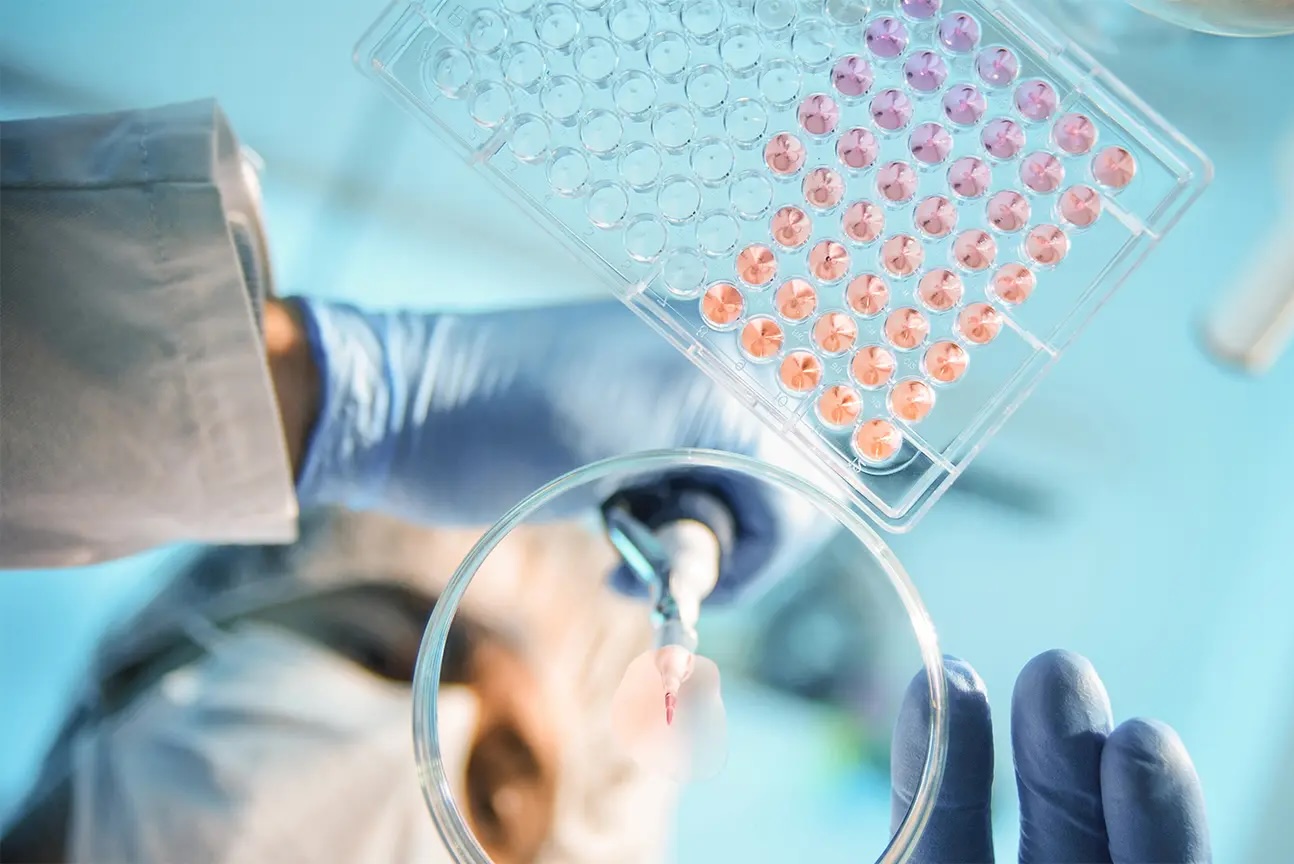
Instead of predicting which drug should work from a genetic mutation, the Functional Precision Medicine (FPM) approach is about exposing a sample of a patient's live cancer cells to cancer drugs to observe which ones kill them or reduce their mass. Although this method cannot simulate the cell microenvironment and actual drug delivery in patients, it provides helpful signals about which drugs are most promising for each individual.
Dr. Letai's article discusses the field of functional precision medicine. It does not reference NCPO, and quotation does not imply endorsement by Dr. Letai, the National Cancer Institute, or the National Institutes of Health.
The logic behind Functional Precision Medicine is the gold standard elsewhere in medicine. To choose an antibiotic, the laboratory isolates the patient's bacteria, exposes them to the available drugs, and reports which ones work. For decades, cancer treatment could not do the same, because tumor cells were difficult to keep alive and test reliably outside the body. That has finally changed.
“If you want to know whether a drug will work, why not expose a person's living cancer cells directly to the therapy and observe what happens?”1
Functional Precision Medicine has to be accessible or it won't benefit oncologists and their patients. The National Center for Personalized Oncology (NCPO) bridges this gap, making functional testing and payer negotiation accessible to every medical oncologist in America.
1- Source: Dr. Letai's article discusses the field of functional precision medicine. It does not reference NCPO, and quotation does not imply endorsement by Dr. Letai, the National Cancer Institute, or the National Institutes of Health.
HOW IT WORKS

Six steps, repeated as the cancer changes.

Biopsy
Take the patient's live cancer cells.
Expose
Put approved cancer drugs on the individual's cells.
Measure
Observe which cancer drugs kill the cells.
Rank
Prioritize cancer drugs by what worked.
Treat
The oncologist composes a treatment or combination of treatments.
Repeat
When the cancer changes, run the test again.

Functional Precision Medicine works at any point in treatment, from the last line to the first. Every time a cancer changes, a new test can identify the next cancer drugs.
Modern FPM platforms differ in how they measure the cells' response.
Those modalities include image-based single-cell screening, changes in cell mass, functional profiling of cell-death signaling, and patient-derived organoids. Those are all in clinical use or clinical study.

What they share is the principle: the patient's actual cancer cells, responding to the actual drugs.
THE CURRENT STATUS

Gaining momentum.

The National Cancer Institute convened a two-day workshop with key leaders in Functional Precision Medicine to chart the course of cancer care. The current NCI Director, Dr. Anthony Letai, is a career innovator in the field, developed BH3 profiling and co-founded the Society for Functional Precision Medicine.

Professional-society posture is moving: ASCO's July 2026 clinical notice cleared away its archived-era objections without yet recommending for or against modern assays.

Coverage has not caught up. Medicare's national coverage determination on tumor drug sensitivity assays has been unchanged since 1996, and neither the tests nor off-guideline drugs are reimbursed by default.

Securing access case by case is work that has to be done patient by patient, which is NCPO's job, and the evidence base is maturing rather than settled, which is why NCPO measures rather than claims: the predictive accuracy of each Treatment Selection Test is tracked through the registered CCCS001 study (NCT07343024) and published as evidence accumulates.
The science is here. Access is the missing layer.
FPM-based tests are one category of the tests NCPO orchestrates on the oncologist's behalf, alongside genomic testing, matching each patient to the appropriate test, delivering expert-reviewed evidence reports on candidate off-guideline drugs, coordinating specimen logistics with the hospital's own pathology, and working coverage with the payer. The oncologist remains the treating physician, and NCPO's work is free to the hospital and to the oncologist.
If you are an Oncologist
If your patient has run out of NCCN-guideline options, NCPO helps you with the scientific evidence to identify effective off-guideline drugs, and the payer access to get them covered. You select and prescribe. Your patient stays with you.
Get Expertise
Arrow Right Icon
If you are a Patient/Caregiver
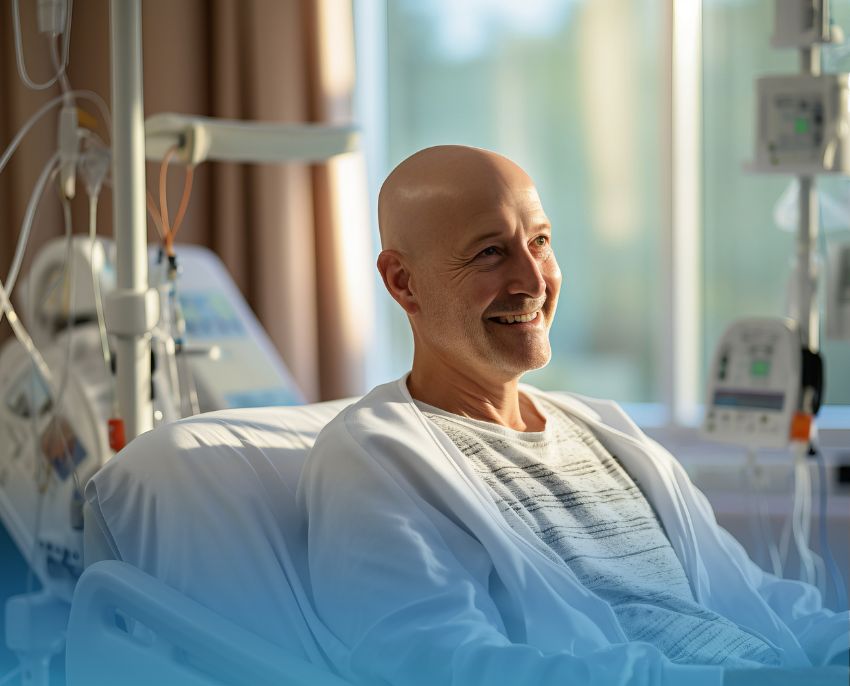
NCPO works to widen what your oncologist can offer, by identifying FDA-approved treatments beyond the standard guidelines and helping secure access to them. While NCPO works with your oncologist, Cancer Commons provides you with free guidance.
Get Guidance
Arrow Right Icon
If you are a Donor/Partner
If you care about extending access to cancer treatments, NCPO offers a capital-efficient way to do it. Philanthropy funds a lean, AI-assisted national resource that equips oncologists nationwide at no cost to them and their practice.
Donate
Arrow Right Icon